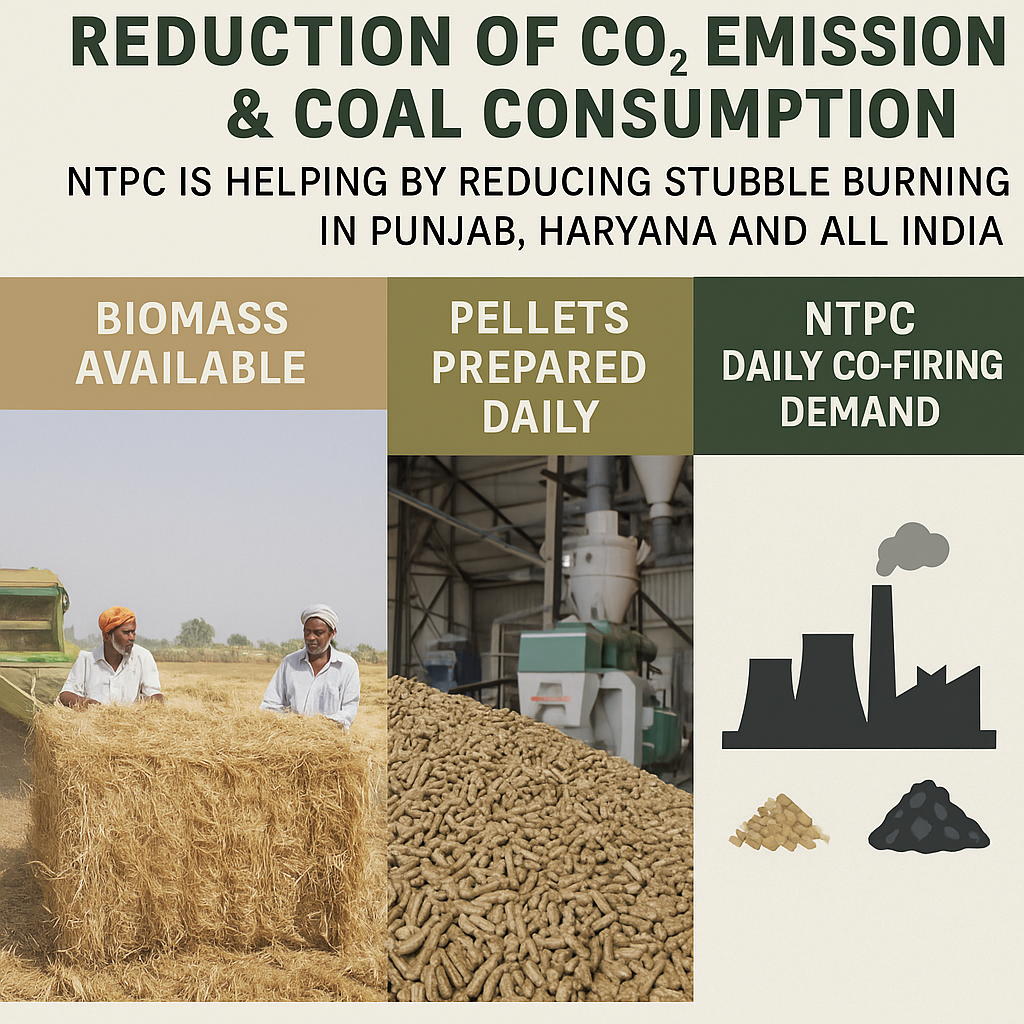
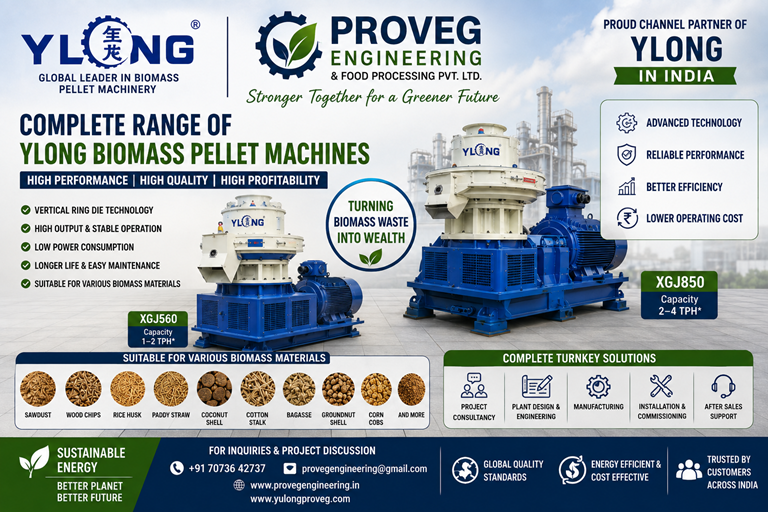
Biomass pellets made from crop residues (rice husk, paddy straw, bagasse, etc.) replace a share of coal in power plants. Because residues are part of the short carbon cycle and pellets burn cleaner (low moisture, uniform size, higher bulk density), co-firing pellets can:
reduce net CO₂ emissions versus 100% coal,
lower coal consumption for the same electricity,
cut SOx/NOx/PM compared to raw biomass burning,
create rural income for farmers by monetizing residues.
NTPC’s Role
NTPC invites pan-India pellet supplies and enables biomass–coal co-firing at multiple stations.
This directly reduces stubble burning by turning paddy straw from Punjab, Haryana and other states into fuel-grade pellets.
Result: cleaner air, avoided open-field fires, steady demand for pellets, and a new residue-to-revenue stream for farmers.
What this means for India
Less coal per MWh and lower lifecycle emissions.
Valorization of ag waste; fewer seasonal fire episodes.
Stronger pellet ecosystem: collection → densification → logistics → co-firing.
Suggested creative (for the poster)
Top band: “Residue to Revenue. Smoke to Power.”
Three panels:
Biomass Available – farmers baling paddy straw.
Pellets Prepared Daily – pellet mill line (hammer → dryer → ring-die).
NTPC Daily Co-Firing Demand – power plant silhouette with pellet+coal icons.
Footer (your branding):
Proveg Engineering & Food Processing Pvt. Ltd.
Kota • Pune • Guwahati • Banaras • Faridabad
📞 7073642737 | 🌐 www.yulongproveg.com
Hashtags (mix English + Hindi)
#BiomassPellets #CoFiring #NTPC #StubbleBurning #Punjab #Haryana #RiceStraw #RiceHusk #WasteToEnergy #SustainableFuel #Bioenergy #CleanAir #CoalSubstitution #RenewableEnergy #CircularEconomy #AgriResidue #PelletPlant #ProvegEngineering #Yulong #GreenIndia #पराली_से_ऊर्जा #स्वच्छऊर्जा #क्लीनएयर #NTPCtender #BiomassSupply #MakeInIndia #EnergyTransition #Decarbonization #NetZero