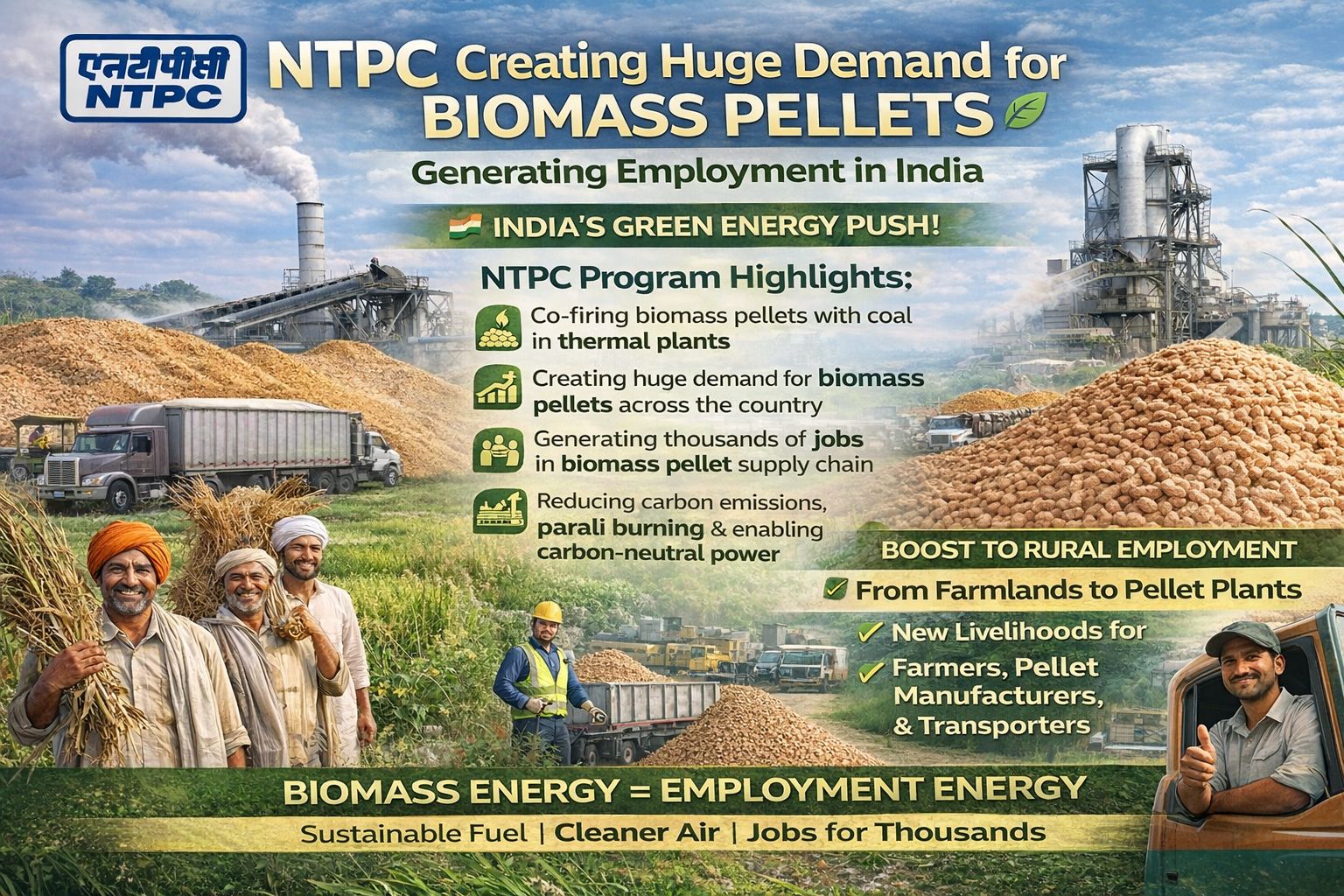
India is witnessing a major transition in its energy landscape, driven by sustainability goals, climate commitments, and the urgent need to reduce air pollution. At the center of this transformation is NTPC, which is playing a pivotal role in accelerating the adoption of biomass pellets through coal–biomass co-firing in thermal power plants.
This strategic shift is not only reducing India’s dependence on fossil fuels but is also creating massive demand for biomass pellets, unlocking large-scale employment opportunities, and providing a sustainable solution to the long-standing problem of crop residue burning.
India’s Shift Towards Biomass Co-Firing
India’s thermal power sector has traditionally relied on coal, but rising environmental concerns and global decarbonization targets have prompted a transition towards cleaner alternatives. Biomass pellets—manufactured from agricultural residues such as paddy straw, rice husk, mustard straw, and other agro-waste—have emerged as a viable and scalable solution.
NTPC has actively adopted biomass co-firing, blending biomass pellets with coal in thermal power plants. This approach:
Reduces greenhouse gas emissions
Cuts down particulate pollution
Helps achieve carbon-neutral power generation targets
Supports India’s renewable and clean energy commitments
Massive Demand for Biomass Pellets Across India
With NTPC and other thermal utilities increasing the percentage of biomass co-firing, the demand for biomass pellets has grown exponentially. This has resulted in:
Continuous and long-term pellet procurement requirements
Creation of dedicated biomass pellet supply chains
Strong market visibility for pellet manufacturers
States with abundant agricultural residue—such as Uttar Pradesh, Bihar, Punjab, Haryana, Madhya Pradesh, Chhattisgarh, Odisha, Maharashtra, Andhra Pradesh, and Telangana—are emerging as key biomass pellet production hubs.
Employment Generation: From Farms to Pellet Plants
One of the most impactful outcomes of NTPC’s biomass initiative is employment generation, particularly in rural and semi-urban India.
Direct Employment Opportunities
Biomass pellet plant operations
Skilled and semi-skilled plant manpower
Machine operators, technicians, and supervisors
Indirect Employment Opportunities
Farmers supplying crop residues
Aggregators and storage operators
Transporters and logistics providers
Equipment manufacturers and service providers
This ecosystem is creating thousands of jobs, improving rural incomes, and strengthening the agricultural value chain.
A Sustainable Solution to Parali Burning
Crop residue burning, especially paddy straw burning, has been a major environmental and health concern in North India. Biomass pelletization provides a practical and profitable alternative by converting waste into valuable fuel.
Benefits include:
Reduction in stubble burning
Cleaner air and improved public health
Additional income for farmers
Environmentally responsible waste management
Economic Opportunities for Entrepreneurs and Investors
The growing demand from NTPC and other power producers has opened new avenues for:
Entrepreneurs setting up biomass pellet plants
Rice millers and agro-processors diversifying revenue streams
Investors entering the green energy and biofuel sector
With policy support, assured demand, and scalable technology, biomass pellet manufacturing has become one of the most promising green businesses in India today.
Biomass Energy: Fueling India’s Green Growth
The biomass pellet ecosystem aligns with multiple national priorities:
Clean energy transition
Rural employment generation
Farmer welfare and income diversification
Reduction in carbon emissions
Sustainable industrial growth
Biomass energy is no longer just an alternative fuel—it is becoming a strategic pillar of India’s energy and employment policy.
Conclusion: Biomass Pellets as Employment Energy
NTPC’s proactive push towards biomass co-firing is transforming India’s power sector while simultaneously strengthening the rural economy. By creating huge demand for biomass pellets, NTPC is enabling a win-win model—cleaner energy for the nation and sustainable livelihoods for thousands.
As India moves towards a greener future, biomass pellets stand out as a powerful solution that connects agriculture, industry, employment, and sustainability into one integrated ecosystem.